

Here are the balsa bones of the model. The structure is fairly conventional using mostly 1/20 or 1/32" balsa. The fuselage is based around a box made from 1/20"sq. strips onto which the formers are glued. The upper fuselage is covered with light 1/32" sheet instead of stringers to better reproduce the finish of the full size aircraft.
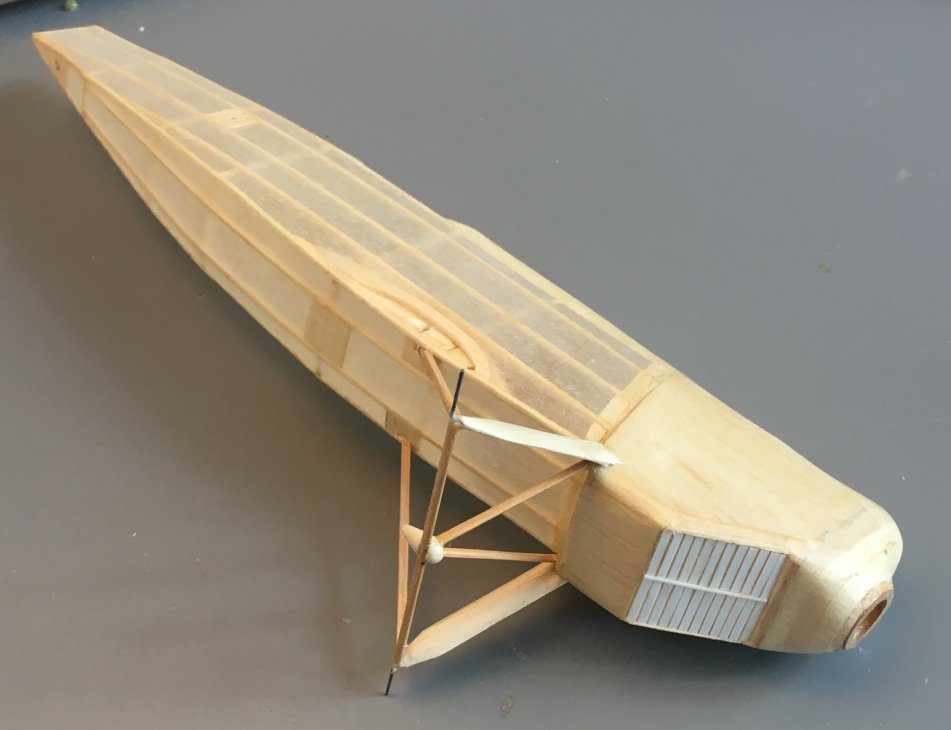
The model was covered with Martin Dilly's Japanese tissue and finished with a coat of banana oil. The lower nose contours are a little tricky to get right - you can see on this photo that a few bits of soft balsa have been inserted to prevent holes appearing after sanding the cowl side cheeks. The Louvres are cut from 10 thou plastic card attached to balsa sheet.
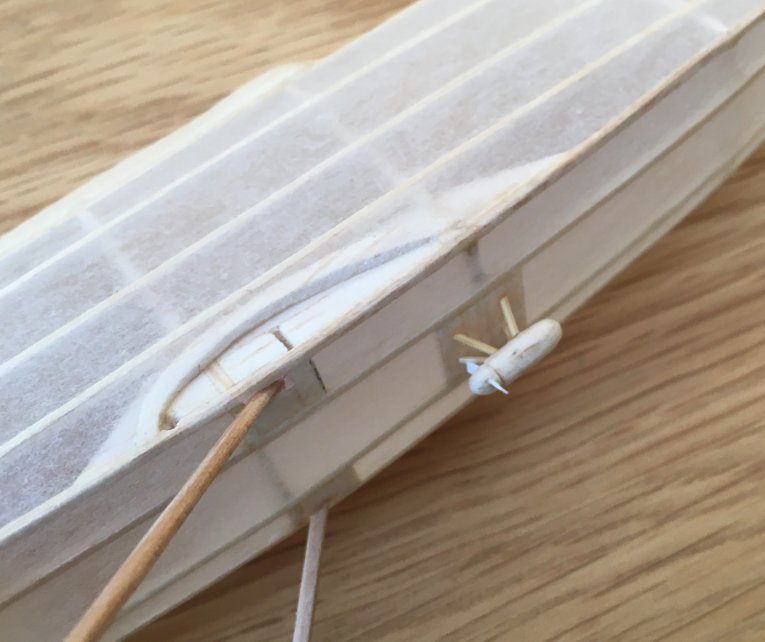
Here you can see what I assume is the wind-driven generator made from scrap balsa with stripped bamboo struts and plastic card blades. Also note how the rear undercarriage struts are free to enter the fuselage through slots in the event of a heavy landing. Finally, you can see the shaped 1/16" balsa tissue anchor at the wing root above where the lower wing sits.
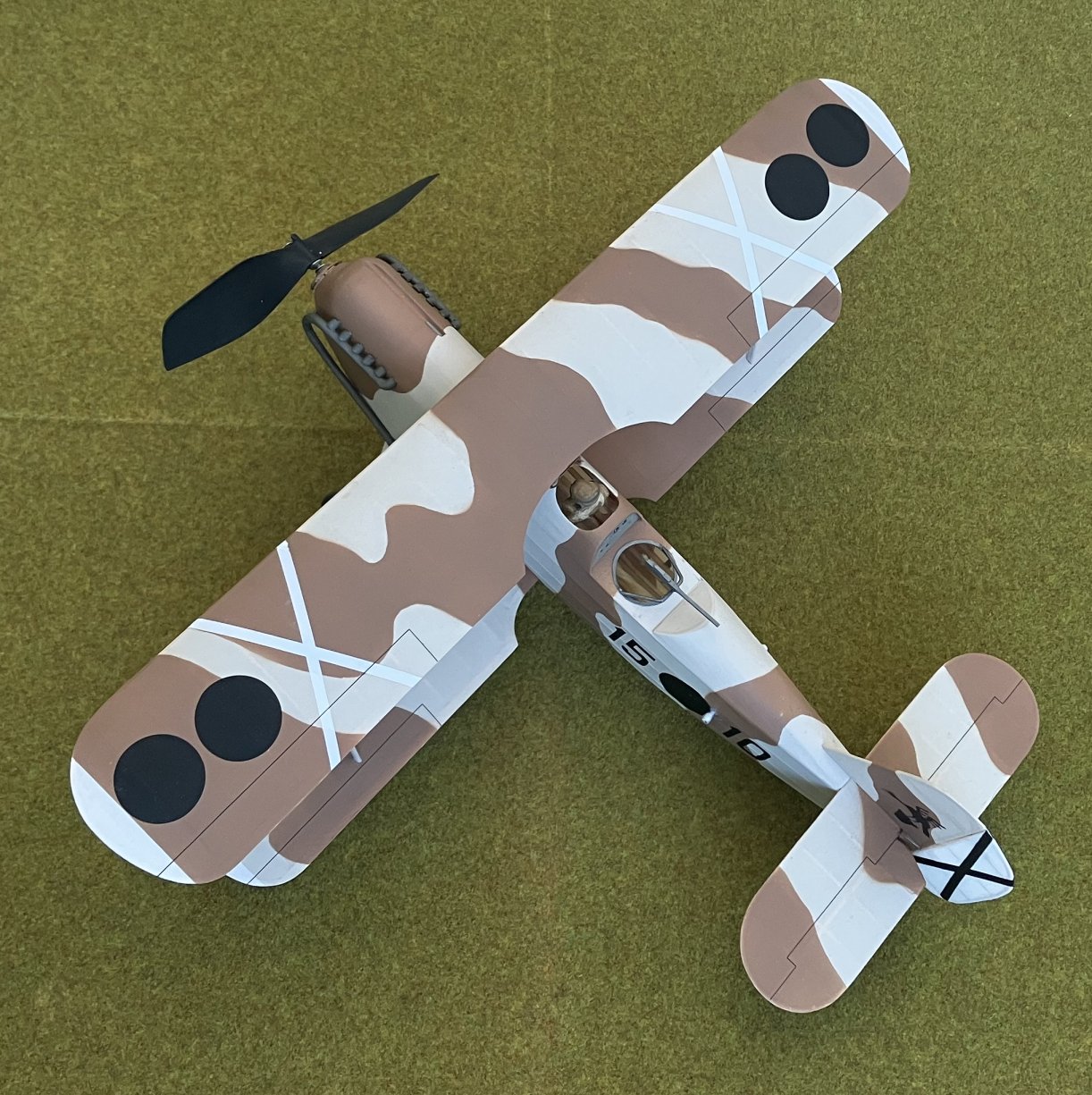
The model used a Tern 6" plastic prop cut down to 5" and scraped with a knife to take about 1 gram off the weight. I'm currently flying it on a loop of 0.110" rubber.
I think this model would also work well at 150%, giving quite a chunky model with a wingspan of 19.5 inches. No changes in structure should be needed - just go up proportionally on the wood sizes. To print a plan this size, select "poster" in Acrobat print settings and select 150% in the "tile scale" box. I've just done this myself and I have to say, I'm rather tempted!
The plan is on two A3 sheets.