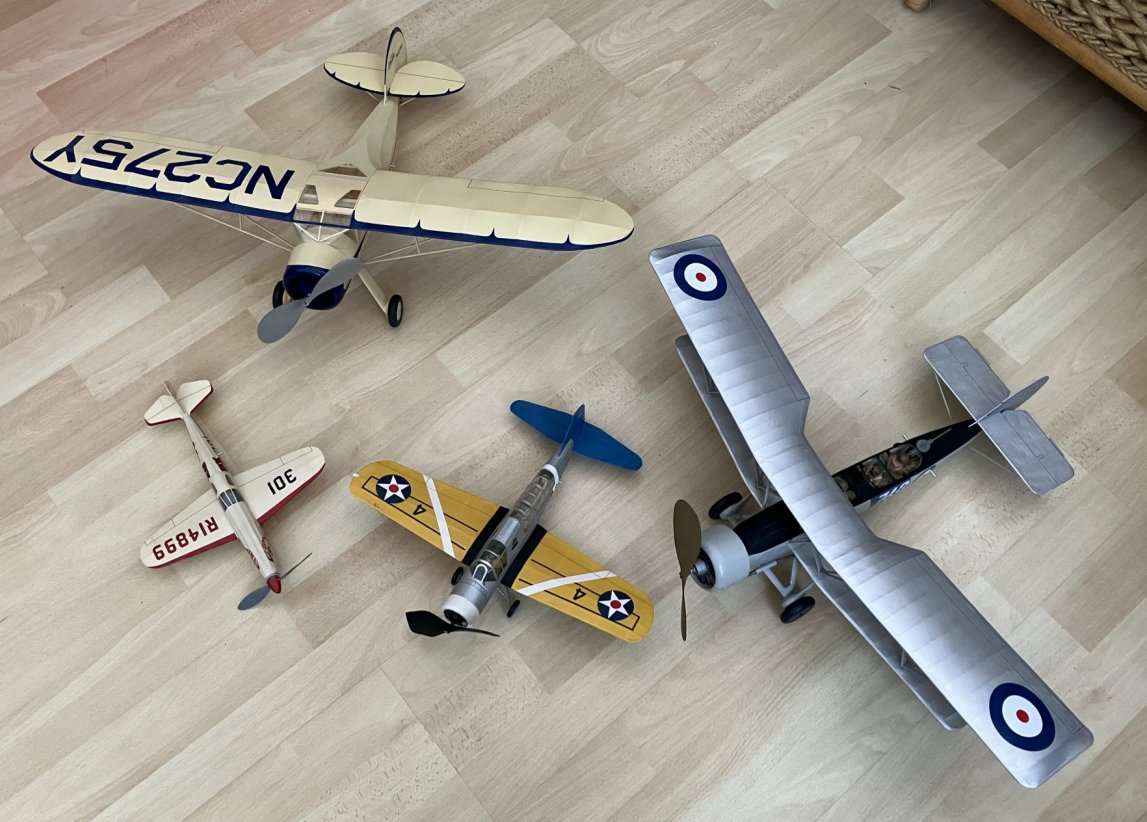
Here was my fleet for this year with two brand new untrimmed models and no Superfreighter because of the reduced size of the hall. The Blackburn Shark was for open rubber and the Luscombe Phantom for kit scale. Not the ideal situation going to a competition, but I was hoping I could get the new models sorted in the trimming sessions between rounds.
There was no Friday trimming session this time, which left those of us travelling on the overnight ferry from Harwich with a day to kill before checking into our hotels in Nijmegen. We decided to break the journey at the Nationaal Militair Museum at Soesterberg, which wasn't a huge detour from our normal route and I have to say we were all very impressed. The museum tells the story of the Dutch armed forces and is housed in a very impressive purpose-built building on an old airfield.
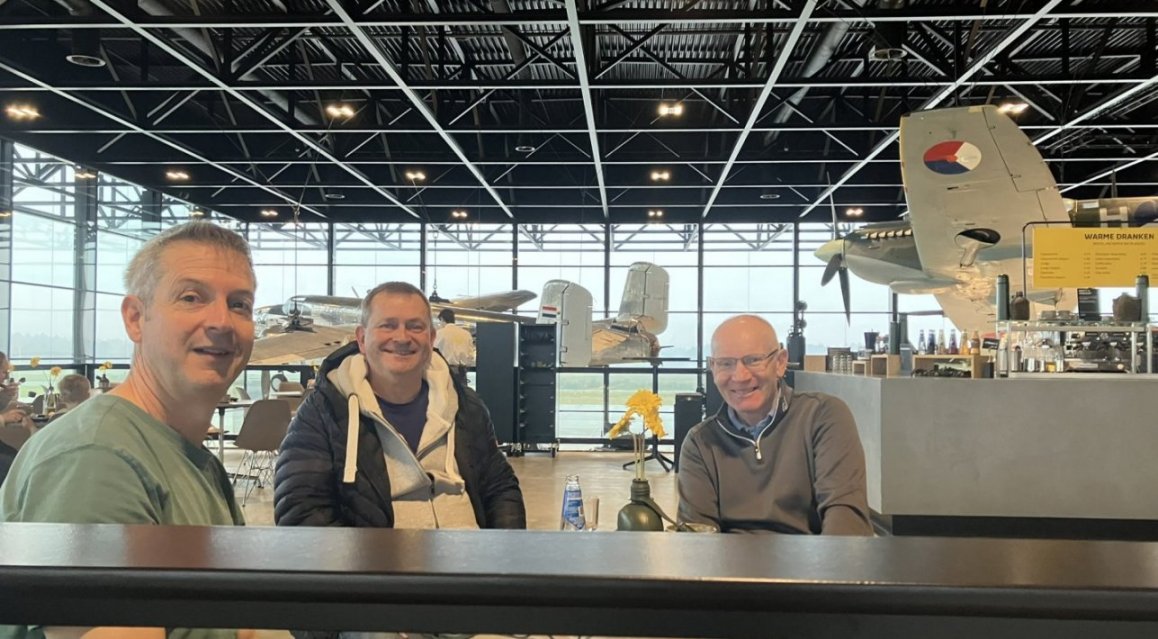
Richard Crossley, Graham Banham and Steve Haines enjoying a coffee at the museum in front of the clipped wing Spitfire with a B.25 Mitchell lurking in the background.
We were up bright and early on Saturday morning and keen to see the new hall. I think we were all pleasantly surprised how good it was and having a pits area with everyone together at one end of the hall, like at Walsall, was a definite plus. There was a healthy entry of around 37 modellers from all over Europe, including some newcomers, which is always nice to see. The Czechs were again out in force, showing us all how it's done. They set such high standards that it can be a bit demoralising, but their models are always a joy to watch.
The organisers run the competition to our old 2019 BMFA rules, so the main difference is in the peanut and pistachio classes, where the rankings in static and flying are added together with the lowest total score being the winner. Also there is no maximum flight time. In Kit Scale, the two best flights count towards the total, whereas in the UK only the single best flight counts. Open classes are virtually unchanged, though CO2 is run as a separate class within F4E.
The F4D (open rubber) class was well supported with 19 entries, 15 of which managed a qualifying flight. The top four places were taken by previously entered models - this time Jiri Dolezel came out on top with his lovely Avia BH-9, featured in the video below. All the videos in this report were taken by Vladimir Alfery, so a big thank-you to him for documenting so many flights.
Second in class was Tonda Alfery's Roland C.IIa - the model that had won at Walsall earlier in the year. This is a superb flyer as you can see in the video below.
It's always a treat to see Lars Tolkstam's Rumpler C.1 in action - it's such a slow and realistic flyer. The model placed third this time - see video below.
Another regular competitor at IIFI is the Bleriot XI-2 of Martin Huk - one thing you notice about the top four models is just how slowly they fly and thus how lightly built they are.
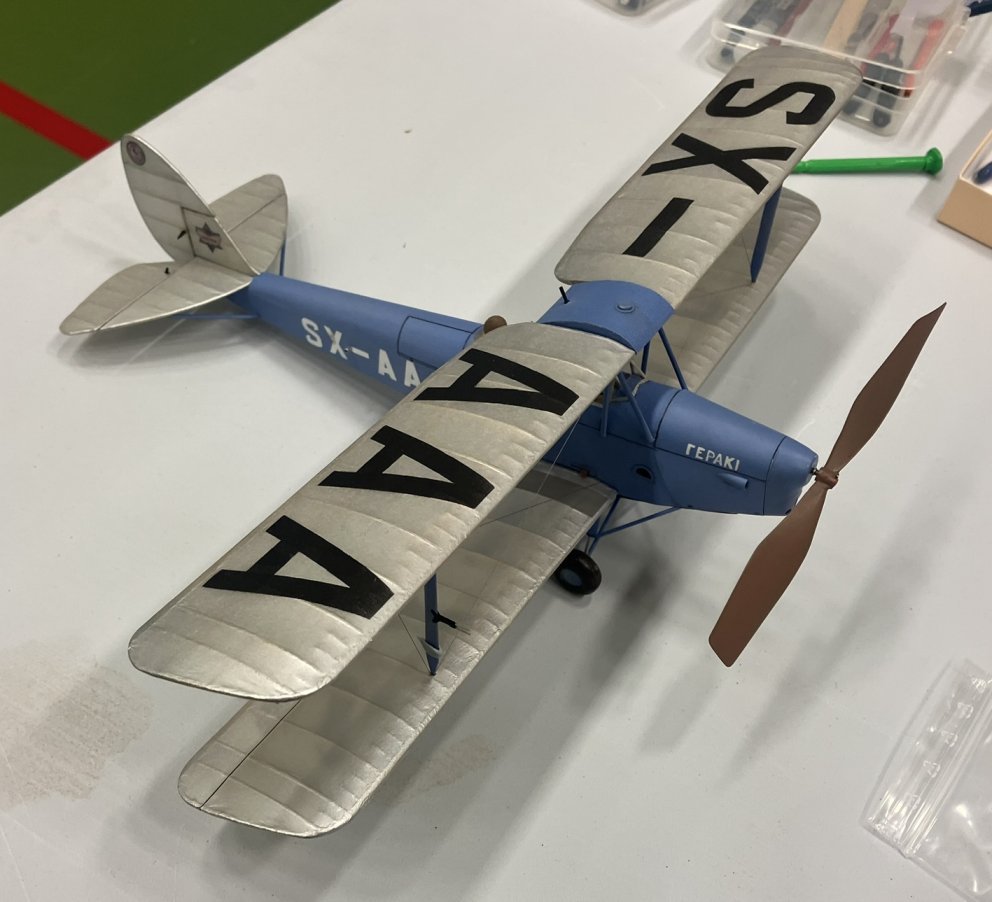
It's not often you see peanut scale models entered in the open rubber class, so huge credit to George Kandylakis for placing fifth with his new D.H.60G III Moth Major.
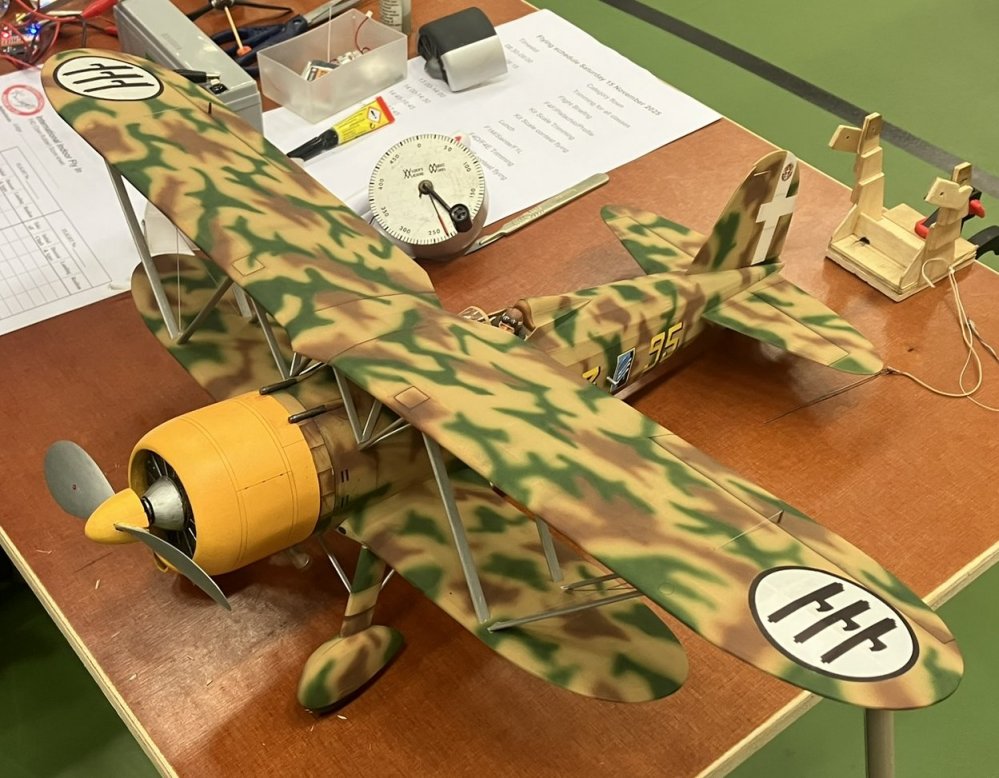
Richard Crossley's new open rubber model is this wonderfully finished Fiat CR 42 - great airbrushing skills in evidence here. The actual aircraft crashed at Orford Ness during the Battle of Britain and was helpfully photographed from several angles by local RAF personnel. Richard finished top of the Brits in sixth place.
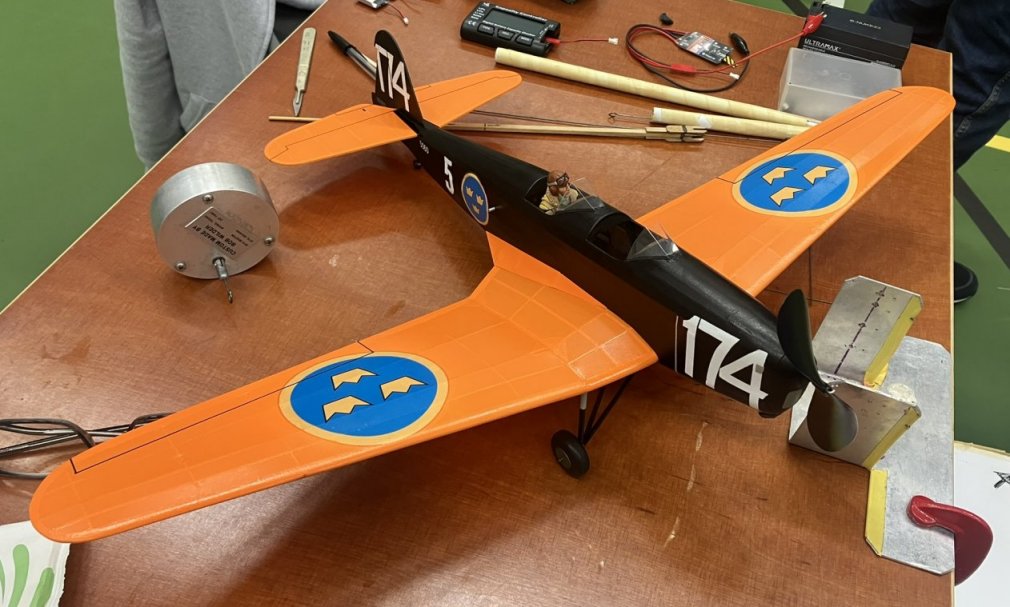
Graham Banham was another with a new open rubber model, this Klemm SK 15A in a colourful Swedish Air Force scheme. Despite it being a low-winger, the model was a very stable performer and placed seventh behind Richard - video below.
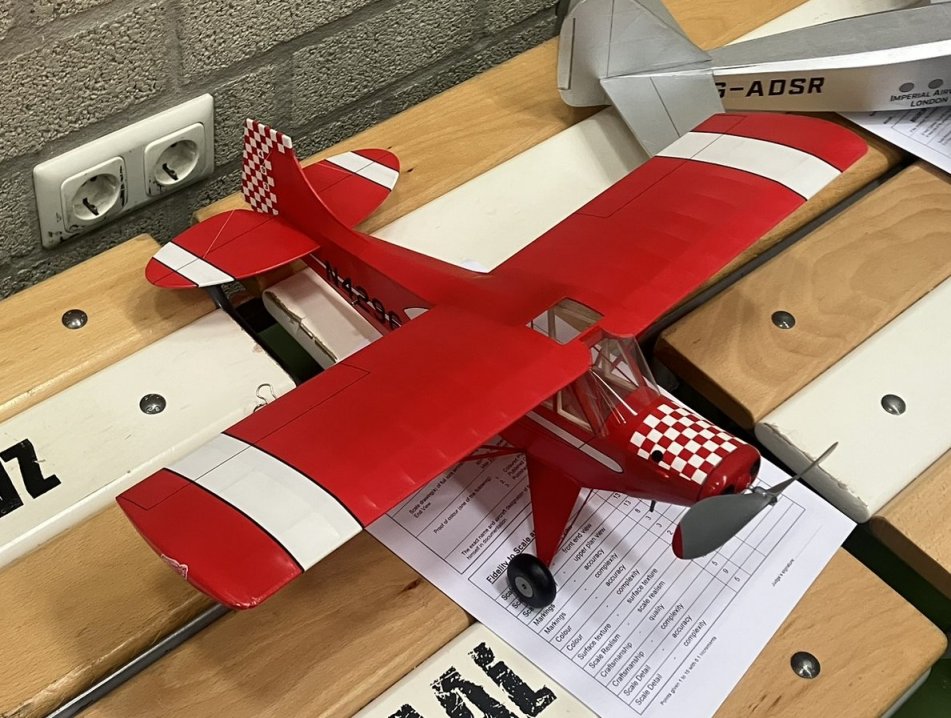
This is Paul Hoey's Myers M-1 Special, based on Richard Crossley's peanut scale plan, but enlarged and with extra details.
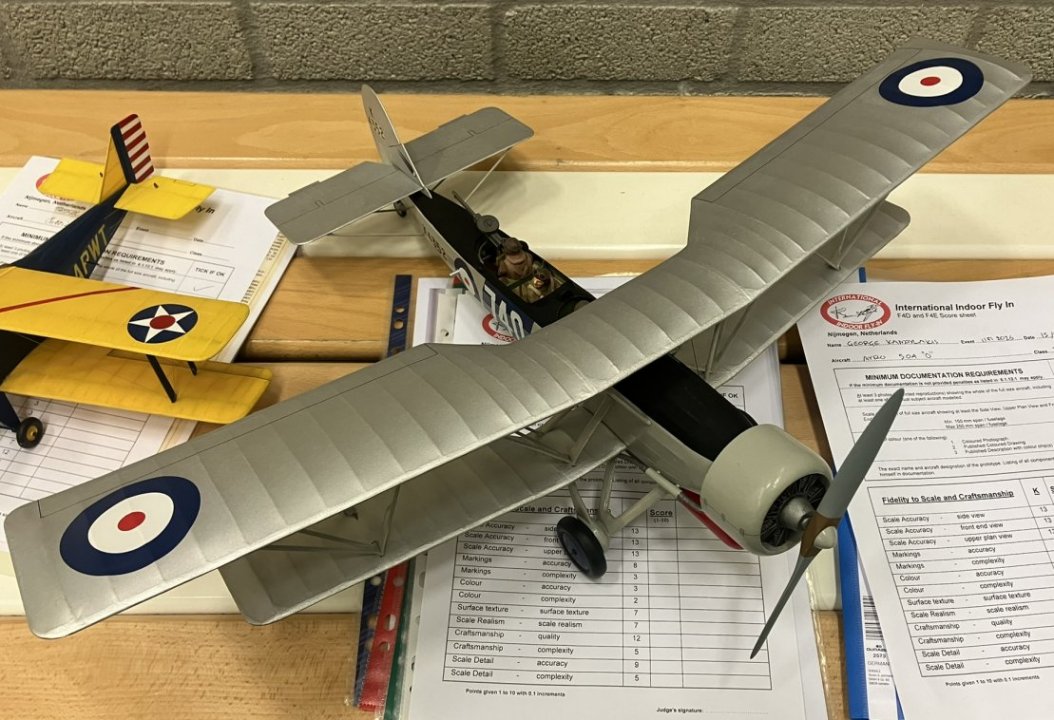
Here's my Blackburn Shark on the judging table showing the scale prop I made at the last minute. In my wisdom, I had decided to make the dummy engine part of the removable nose plug, but I didn't have the time (or inclination) to fabricate 14 new cylinders for a second nose plug on which to mount the scale prop. Thus "plan B" was to cut through the prop shaft after I had made my four competition flights , remove the flying prop and tack-glue the scale prop in place before static judging.
Thankfully, the model trimmed out quite easily and stayed away from the walls. I added an extra 1/16" loop to the two loops of 1/8" rubber in time for my Sunday flights to get the model a bit higher, but this resulted in lower flying scores than Saturday. I think I will open out the turn a bit to reduce the bank, which is a little steep, but overall was very happy that I got four safe qualifying flights first time out and the model came home in one piece. The video below shows one of the Saturday flights.
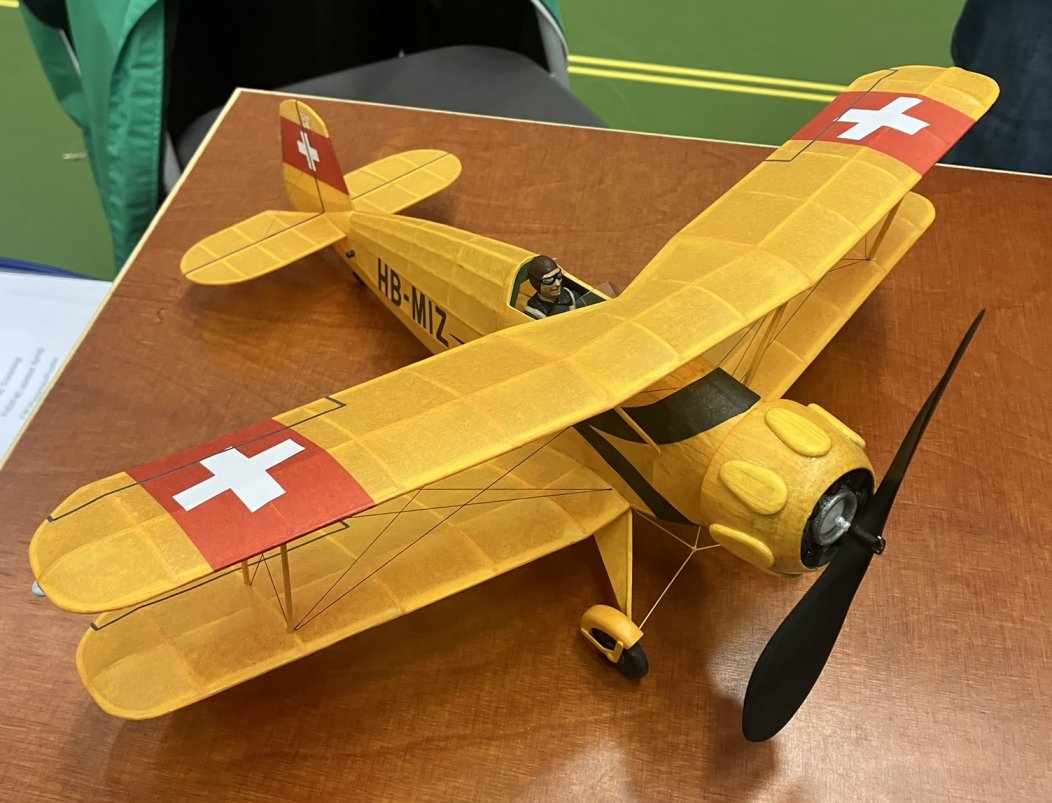
Steve Haines was flying the 16" span Bucker Jungmeister that he had entered in the intermediate scale class at Walsall and had it going nicely. In the flight shown below the model landed just the wrong side of the bench at the edge of the flying area, but survived unscathed.
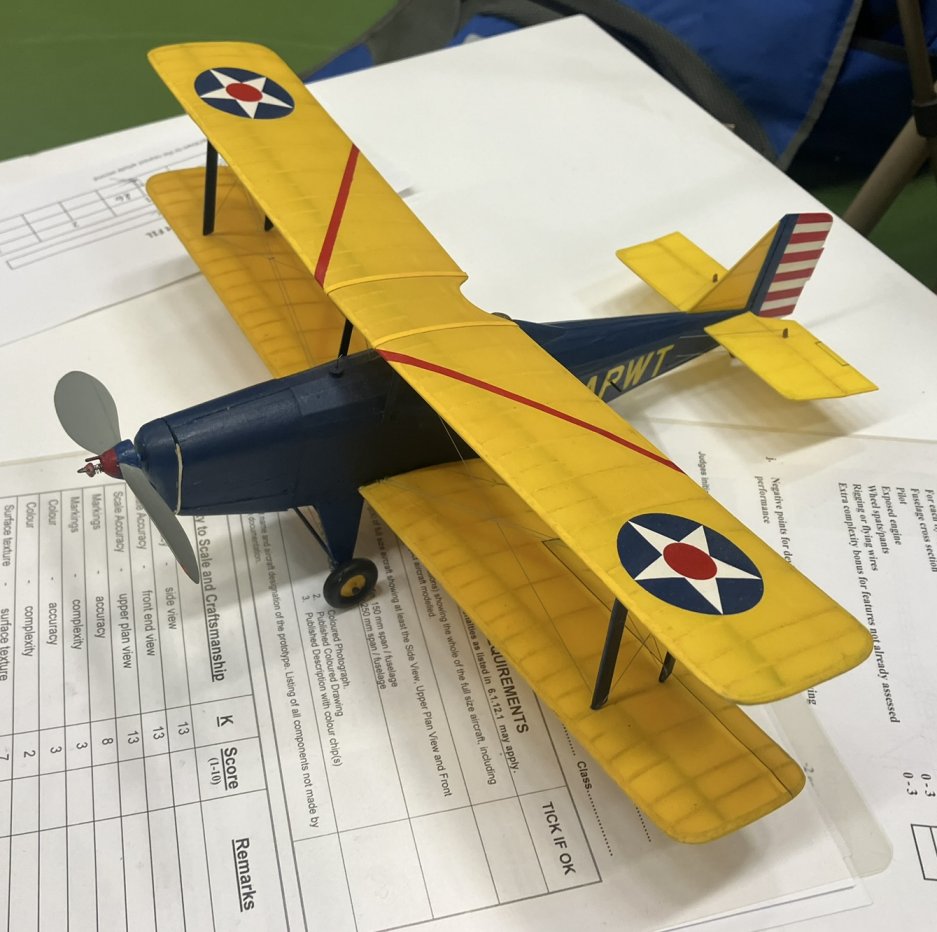
It was Jiri Tamfal's first visit to the event and his F4D entry was this neat Currie Wot.
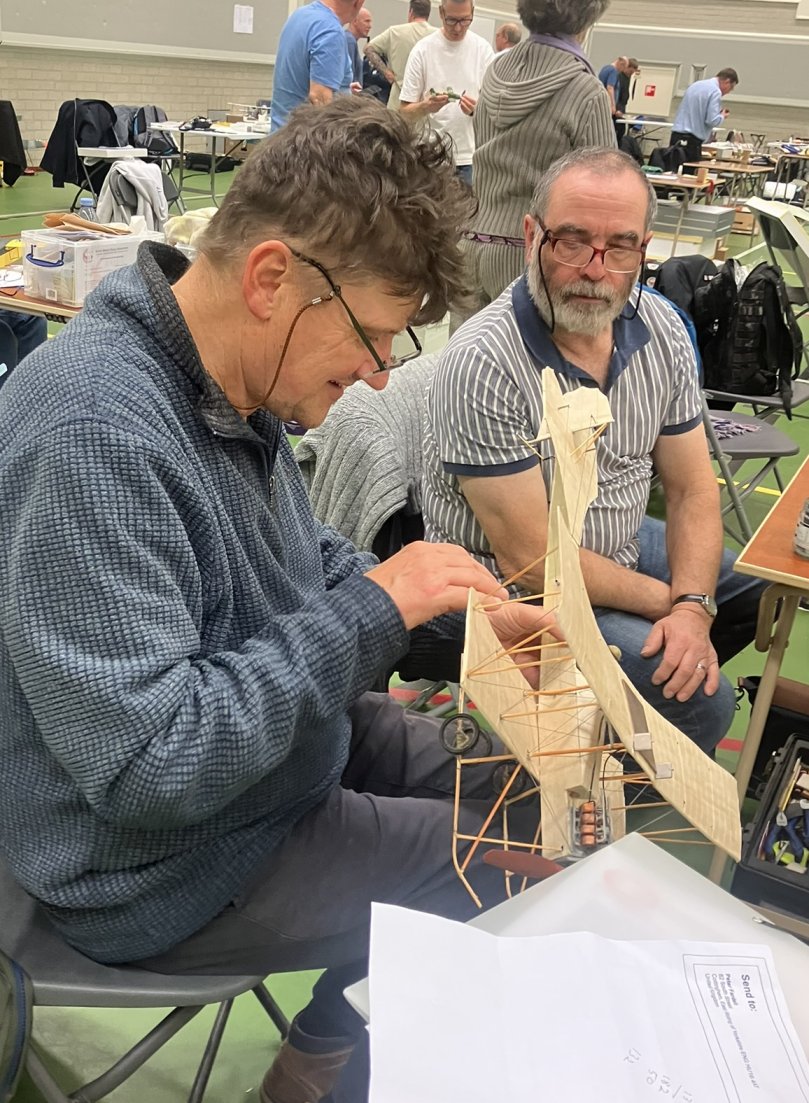
Pete Fardell working on his new Avro Type D with Tim Horne looking on. The model is of all-sheet construction and full of charactor. Sadly Pete couldn't quite make the 15 second qualifying flight time.
In F4E (Eectric Open) there were just the seven entries this year, two down on last time. All managed at least one qualifying flight.
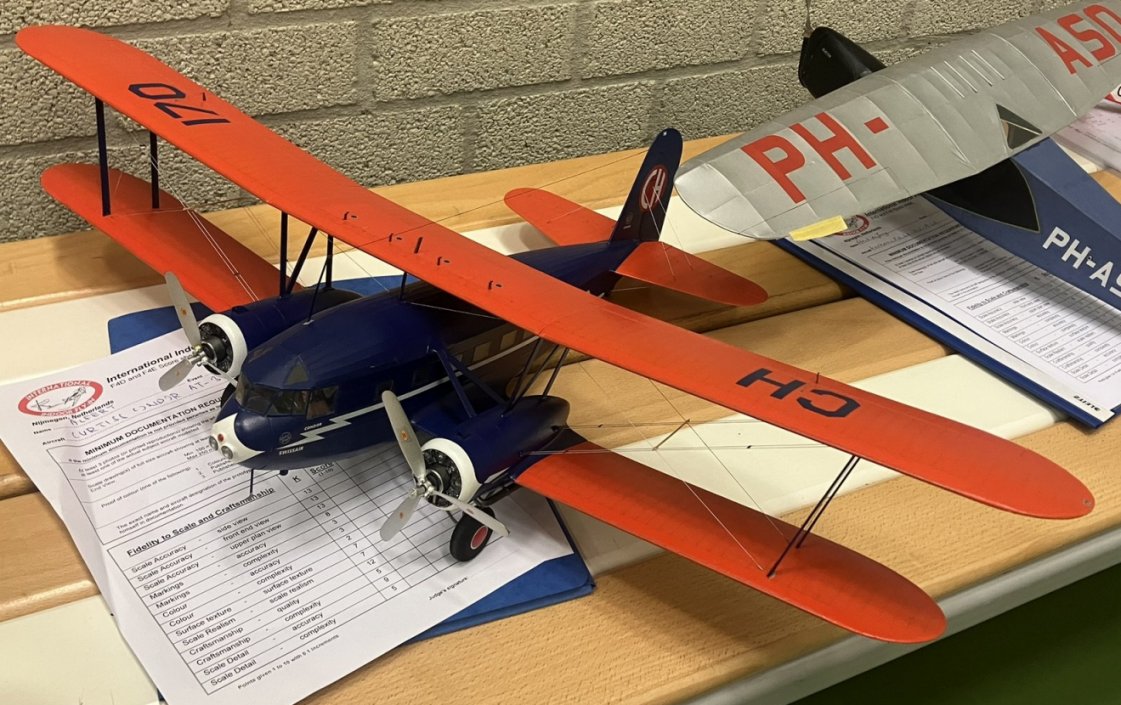
Tonda Alfery won again with his wonderful Curtiss Condor, featuring a working retracting undercarriage. This model gets flight bonuses for being a twin as well as for the functioning undercarriage, so is very difficult to beat.
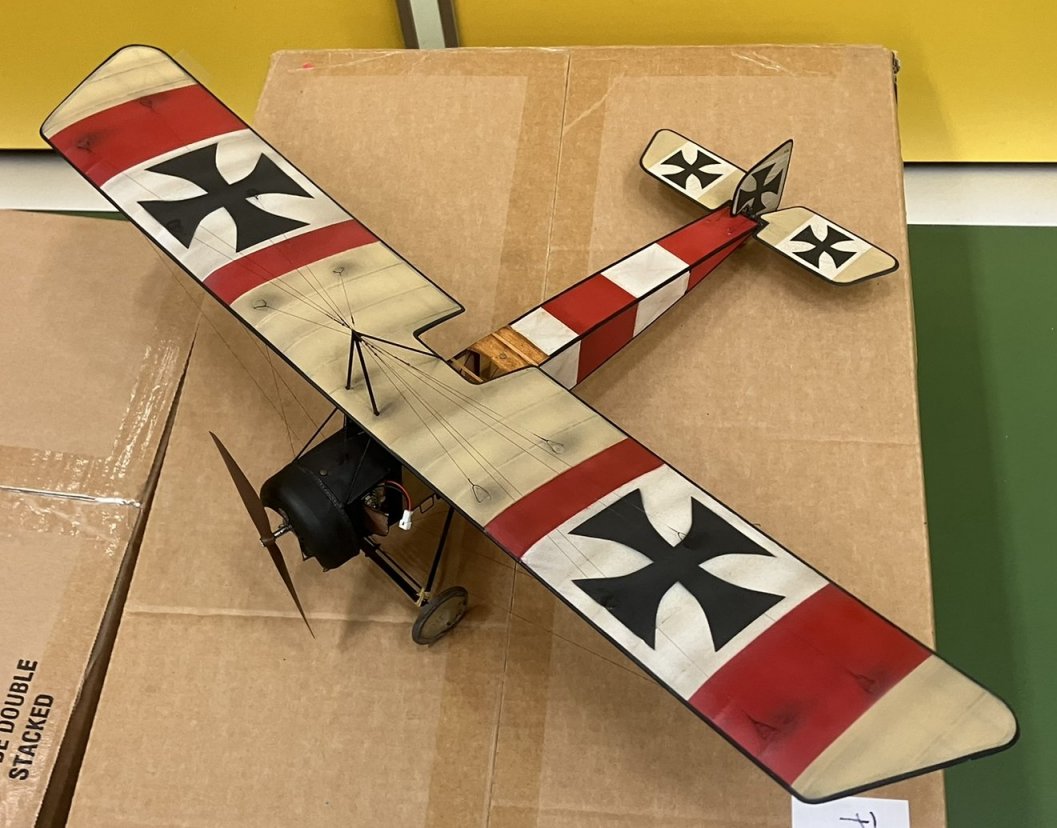
Jiri Dolezel placed second with this superbly detailed and finished Pfalz A1.
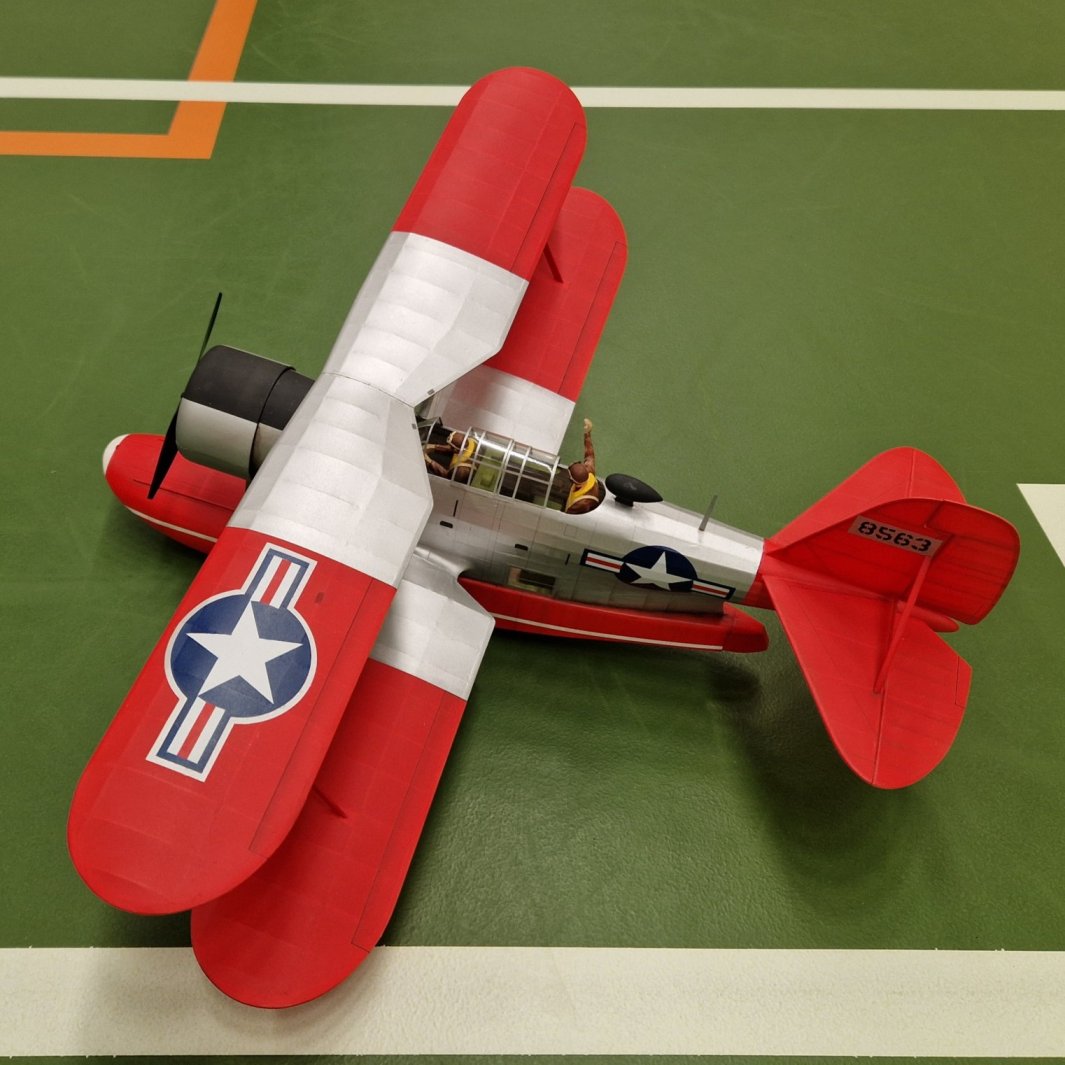
Finishing just one point behind, in third place, was Richard Crossley with his newly finished Grumman J2F-6 Duck. The colour scheme chosen was the one featured on the Airfix 1/72 scale kit box. The model uses a dolley for take-offs and flew very realistically - see video below. Thanks to Lars Tolkstam for the photo.
Martin Huk finished fourth with this Morane Saulnier type L parasol.
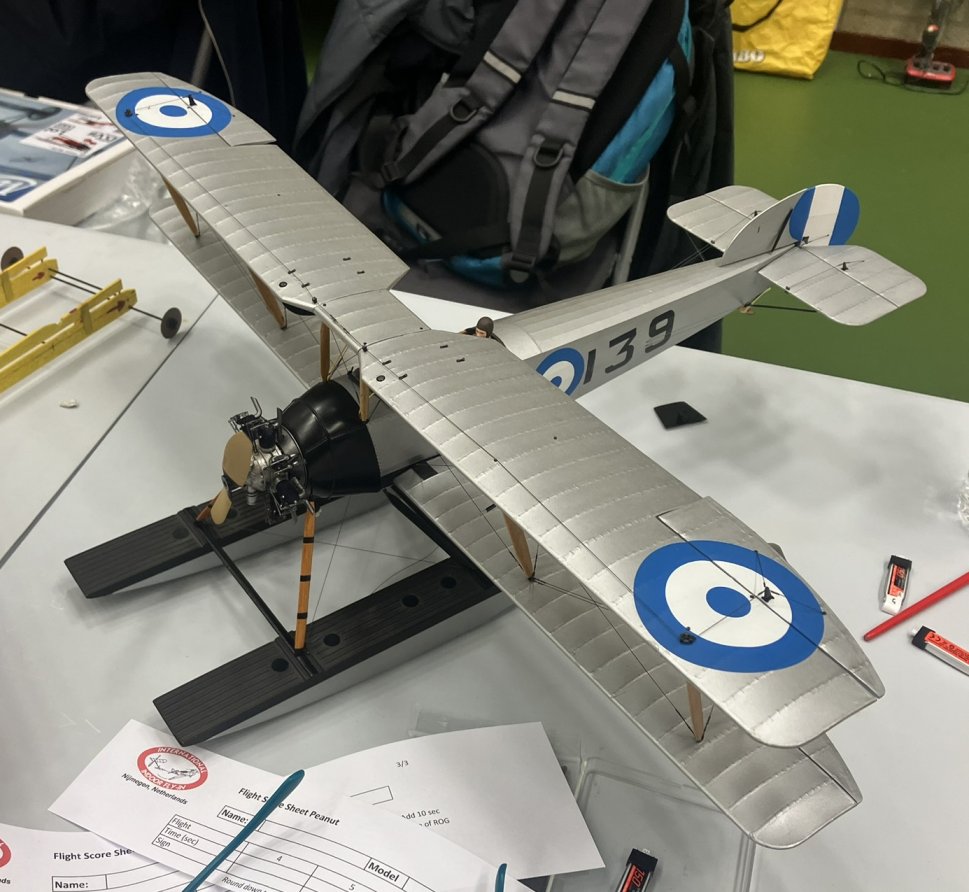
There was a great round of applause when George Kandylakis managed a qualifying time with the last flight of his Avro 504 "O". This immaculate model got the highest static mark in the class. Just look at that wing rib stitching and the aileron cable runs!
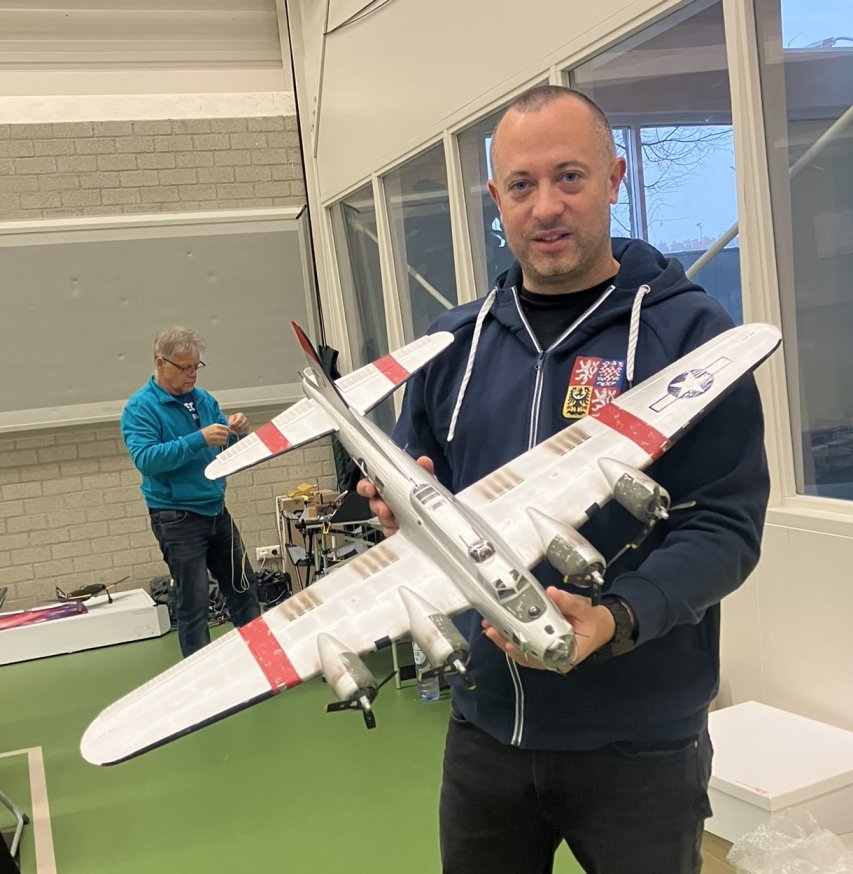
Jiri Dolezel brought along his new electric B-17 Flying Fortress to show us - a model which could give Tonda a run for his money next year. It's electric (of course) and has retracting main gear and tailwheel. It also features a fully detailed crew compartment. I can't wait to see it in action!
The F4E (CO2) class had just five entries this time, all of which achieved qualifying flights.
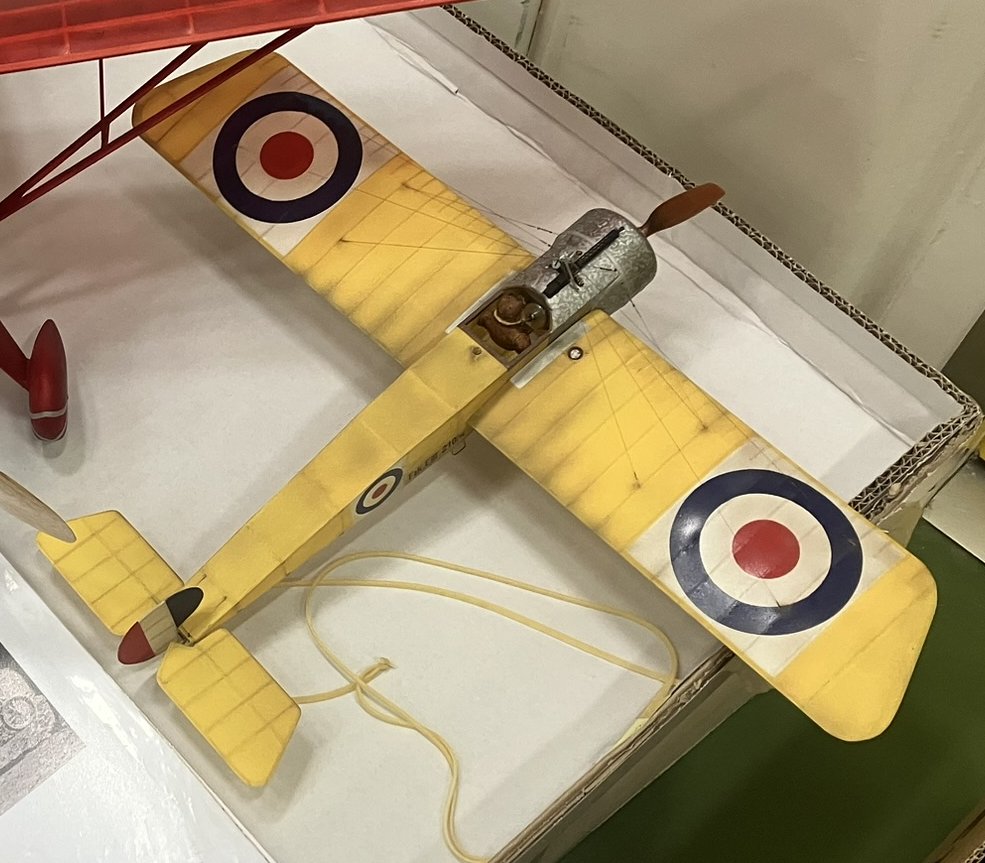
Jiri Dolezel's Fokker E.III in RAF markings came out on top this year - it came first in static and second in flying. Note the effective weathering, highlighting the underlying scale structure.
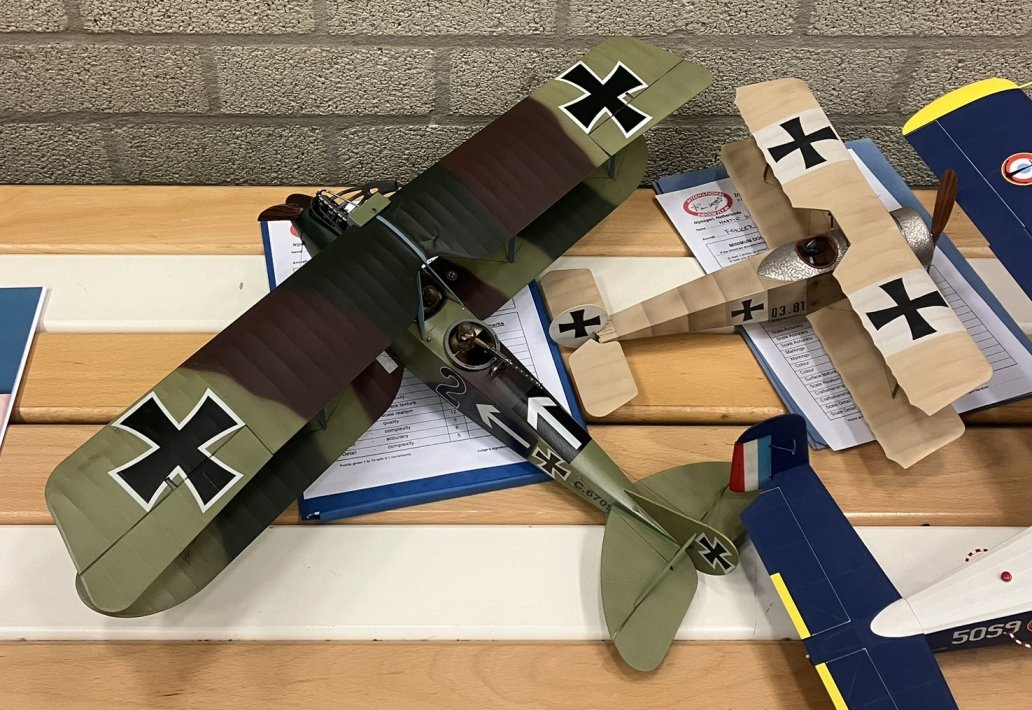
Here are the second and fourth placed models - on the right is Martin Huk's Fokker B.II (second) and on the left Tonda Alfery's Rumpler C.IV (fourth).
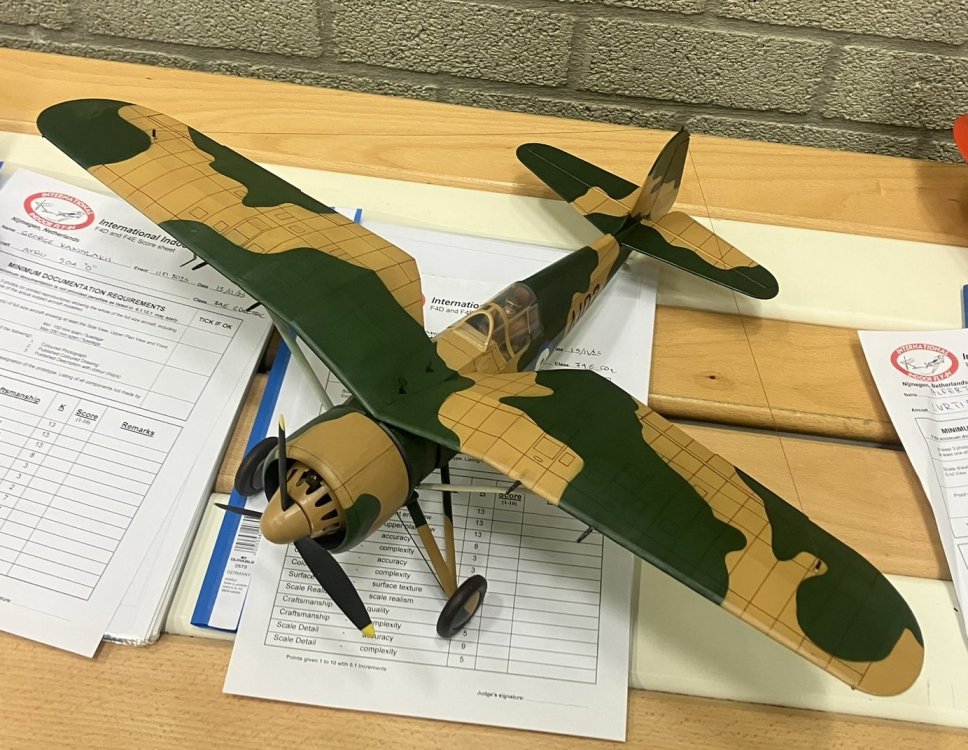
George Kandylakis had his PZL P.24 flying as well as I've ever seen it, getting the best flight score in class and finishing third overall.
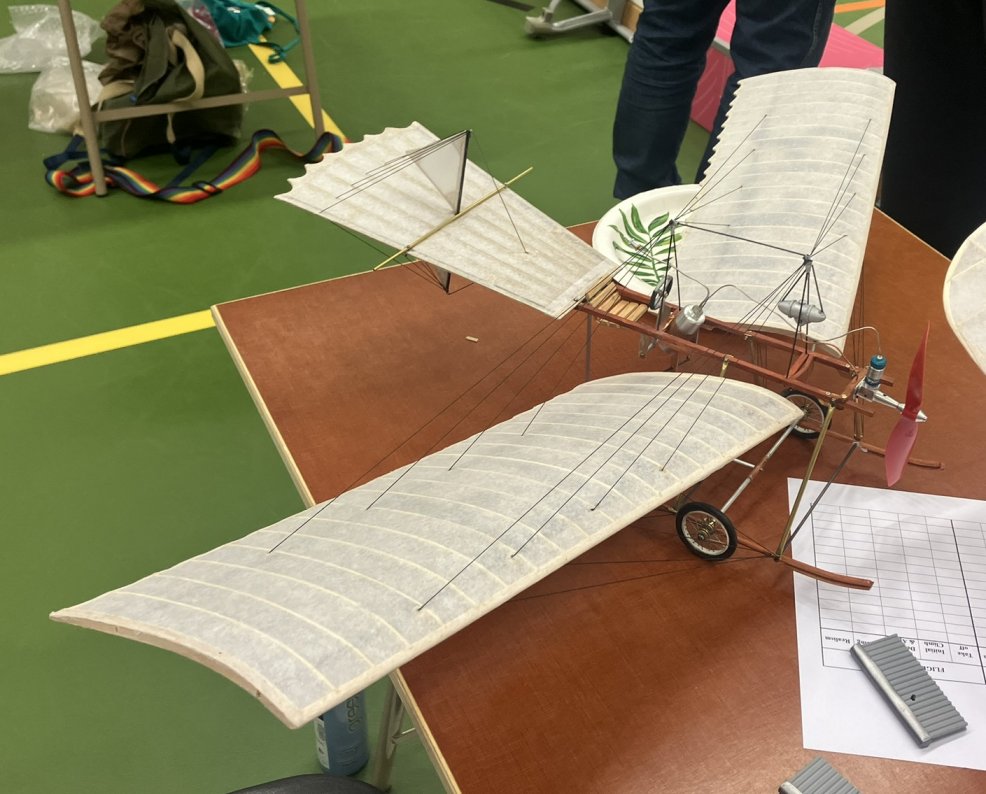
Four of the five models we had seen before, but Andre Wind brought along a new Fokker Spin which he had flying very nicely on Sunday.
Kit scale entries were down a bit this year - last year we had 20, this time 15, with all but one model achieving the 10 second qualifying time.
Two of the top three places were taken by Veron Tru-Flite Comper Swifts – Graham Banham coming first with his successful model from the Indoor Nats and Jiri Pavlicek placing third. Phil Smith would have been very proud! One of Graham's flights is shown below.
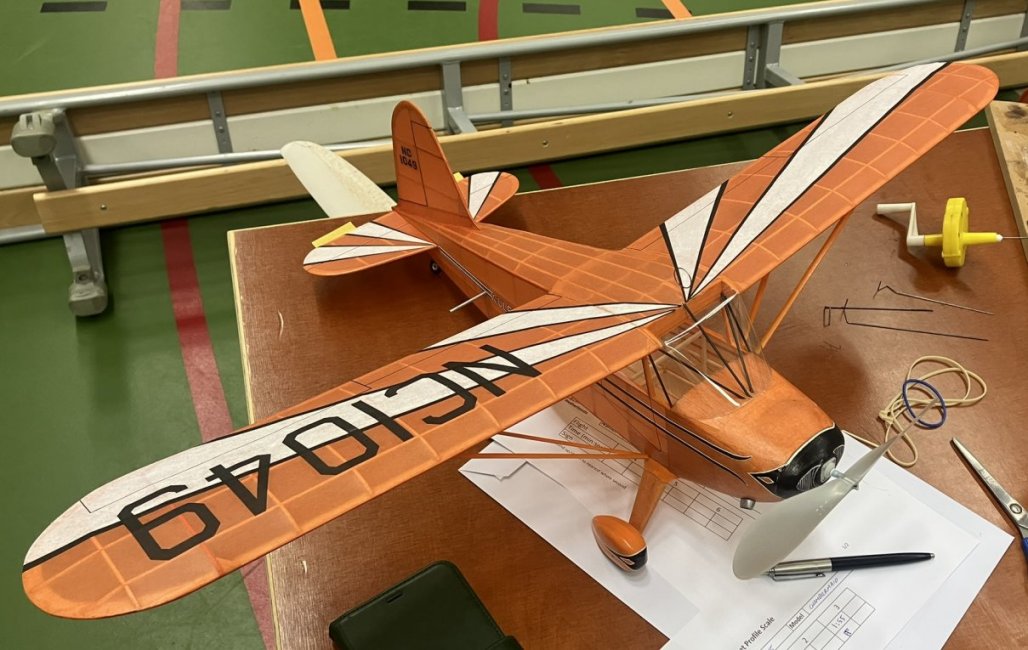
Splitting the two Swifts was this really nice new Stinson 105 "Gulfhawk Junior" built from the vintage 30" span Megows plan by Tim Horne. A good safe catch by Tonda Alfery can be seen in the video below.
I was pleased that my 25” span Comet Luscombe Phantom placed fifth first time out – I tied on points with Steve Haines's Micro X Taylorcraft, but Steve finished fourth because his flying score was 0.5 points higher. The Phantom proved easy to trim and flew nice and slowly. I found it interesting that four of the top five placed models were vintage designs. Below is one of Steve's flights, followed by my Phantom.
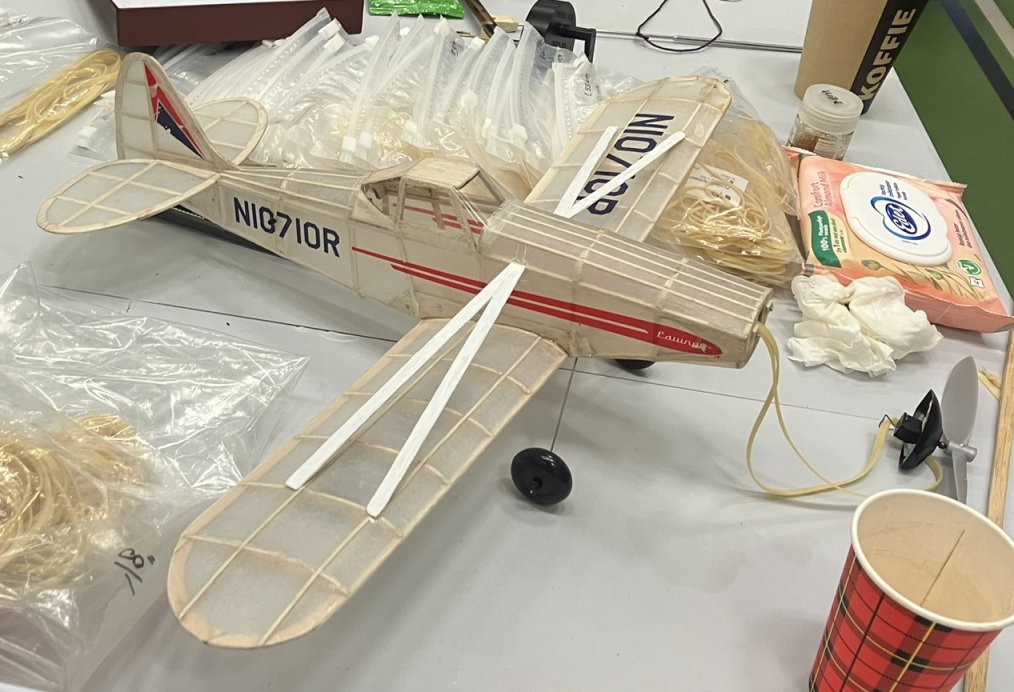
Spyros Terzimpasis made his first visit to the event and entered kit scale with this Piper PA-25 Pawnee, built from the PM Models kit. He was delighted to get a qualifying flight in on Sunday.
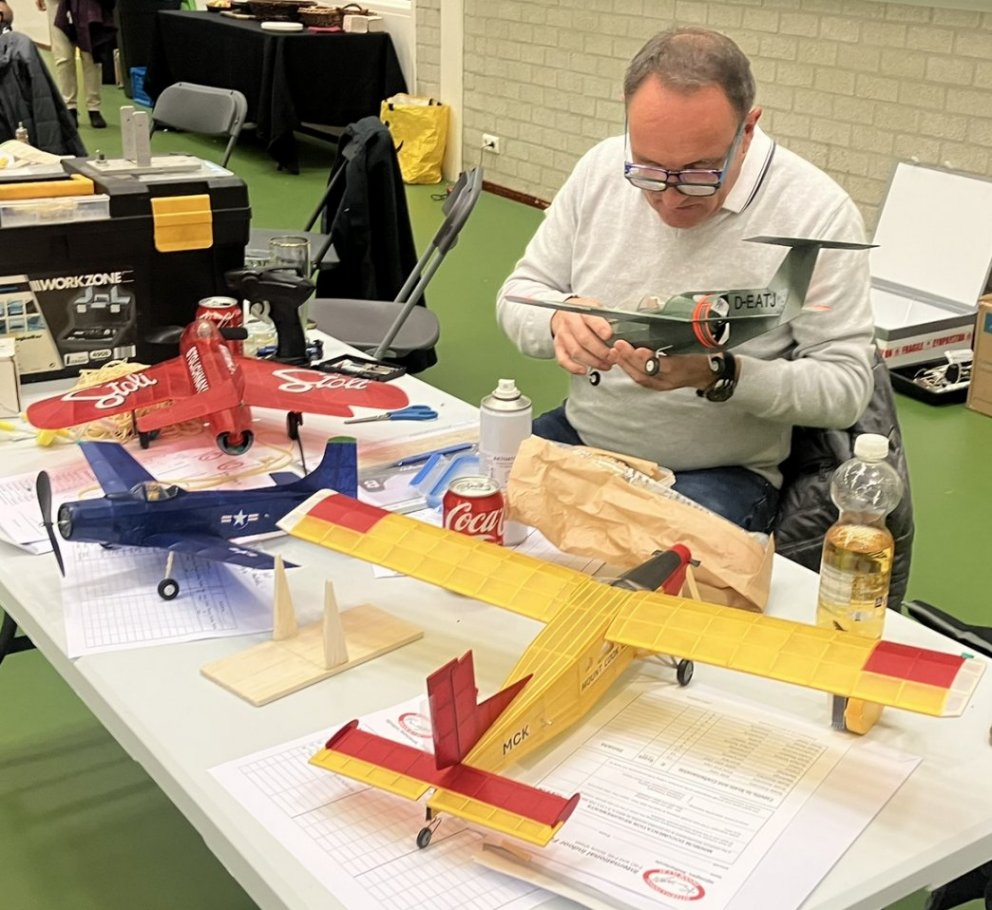
Here you can see Matthias Kritzler's Pilatus PC-6 Turbo Porter, which I think is built from the Guillows kit. Behind is Martin Lambert's Guillows Skyraider and Dumas Mig 17. Martin can be seen working on his electric Fantrainer 600.
Peanut scale was the most popular class this year with 21 models, four more than 2024.
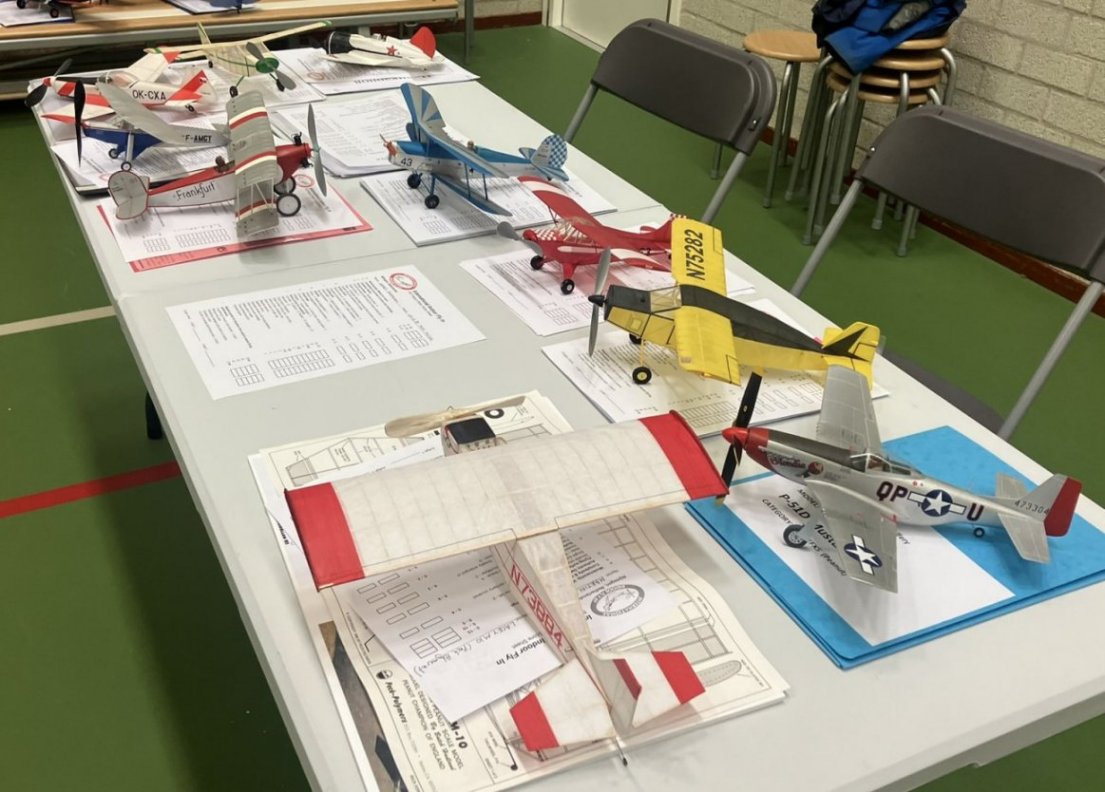
A selection of peanuts on the judging table - some were familar, including Tonda Alfery's winning P-51D Mustang at front right, which managed an impressive two flight total of 183 seconds. Martin Pike's Lacey M.10 is front left and behind the Mustang is Steven Haines's Nesmith Cougar.
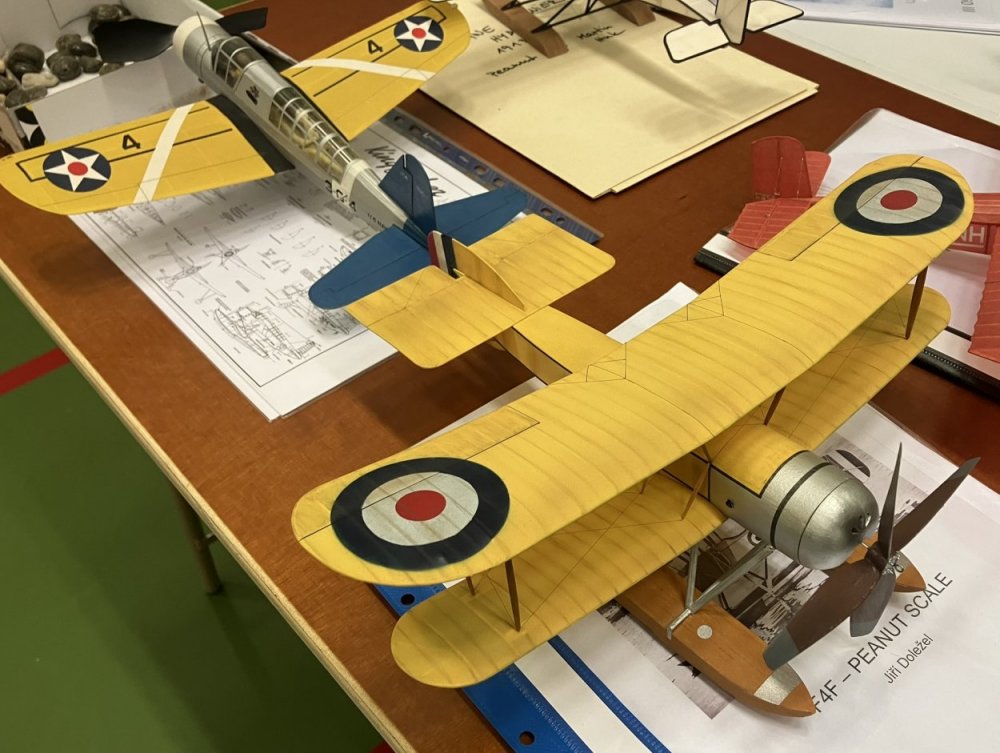
Jiri Dolezel entered this new Wight Baby, built and finished to his usual high standard. The model placed third in class behind Lars Tolkstam's Gerner G.1. My Kingfisher, seen in the background, wasn't flying particularly well, and ended up in a rather disappointing 12th place. Maybe time for a new peanut I think.
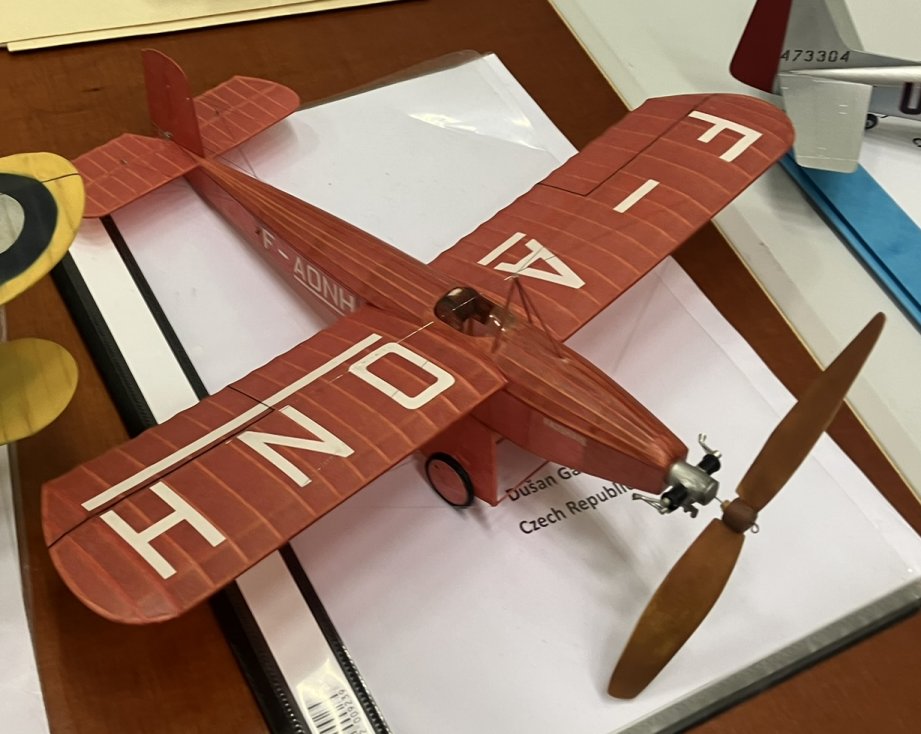
Dusan Garba placed fourth with his Farman F.450 which achieved the second best flight score of 175 seconds.
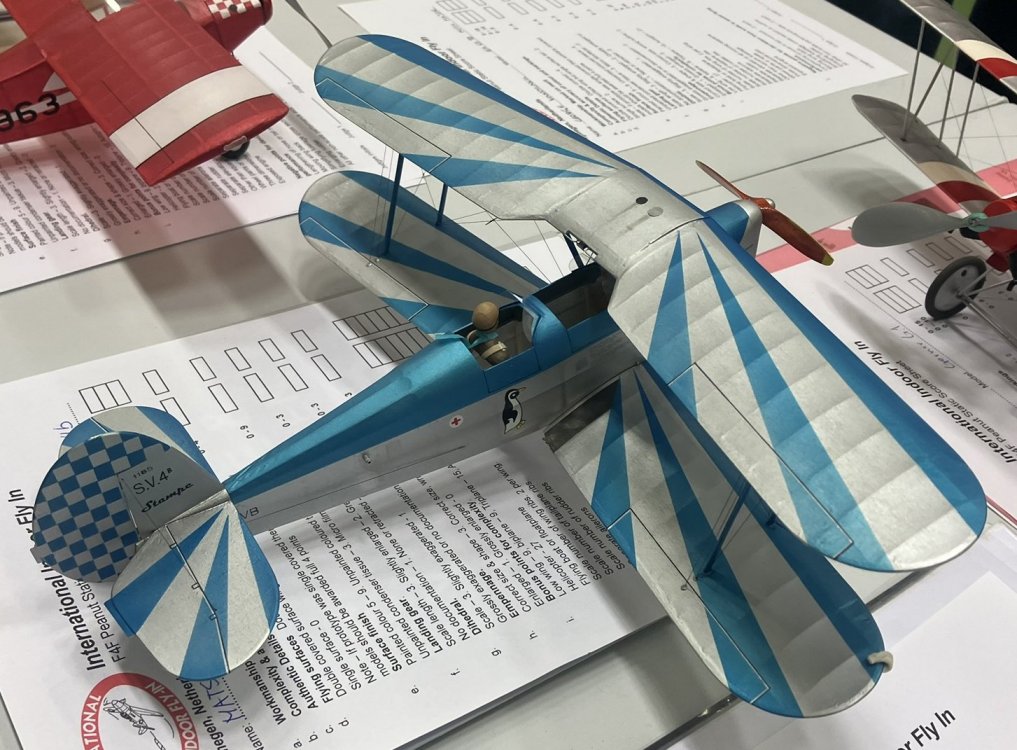
Mats Johansson brought along two new Stampe SV.4b peanuts and entered this one in the contest. Both models were superbly finished and this one got the top static mark in the competition.
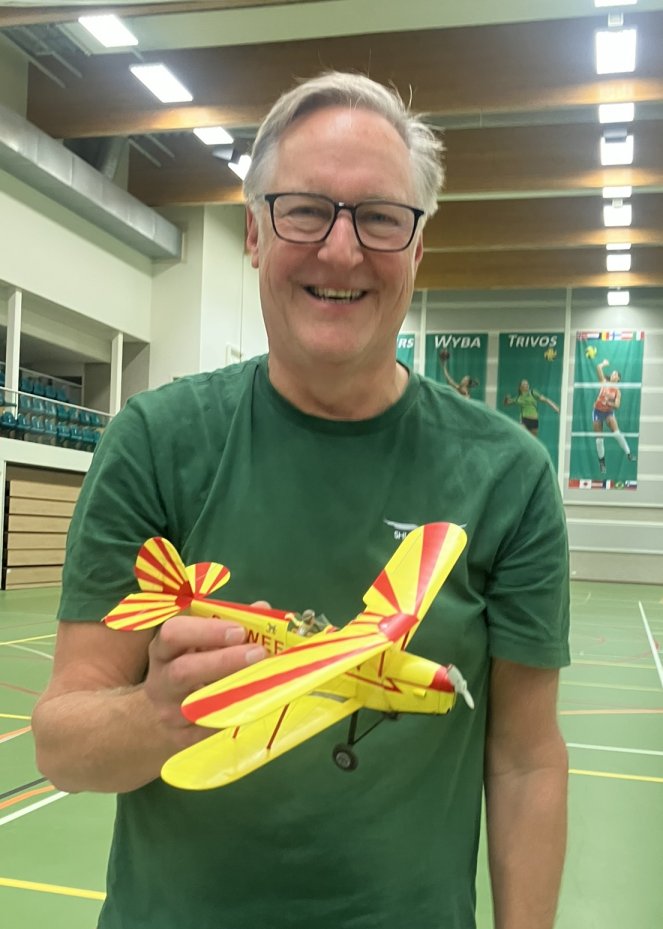
Here is Mats holding the yellow one, which was just as nice.
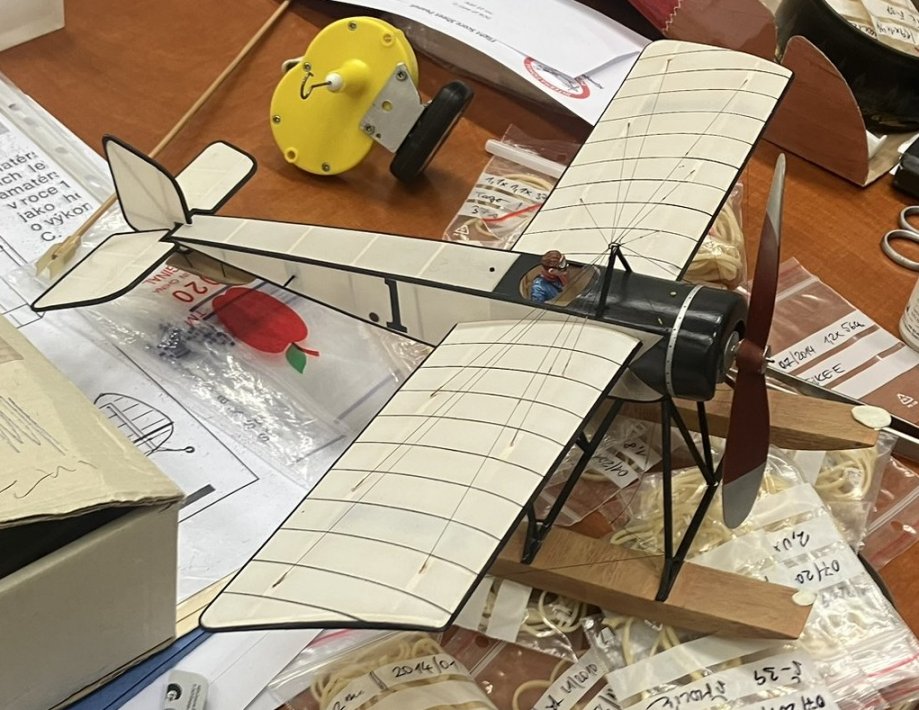
This is Martin Huk's superb 1913 Morane Hydro, which placed fifth.
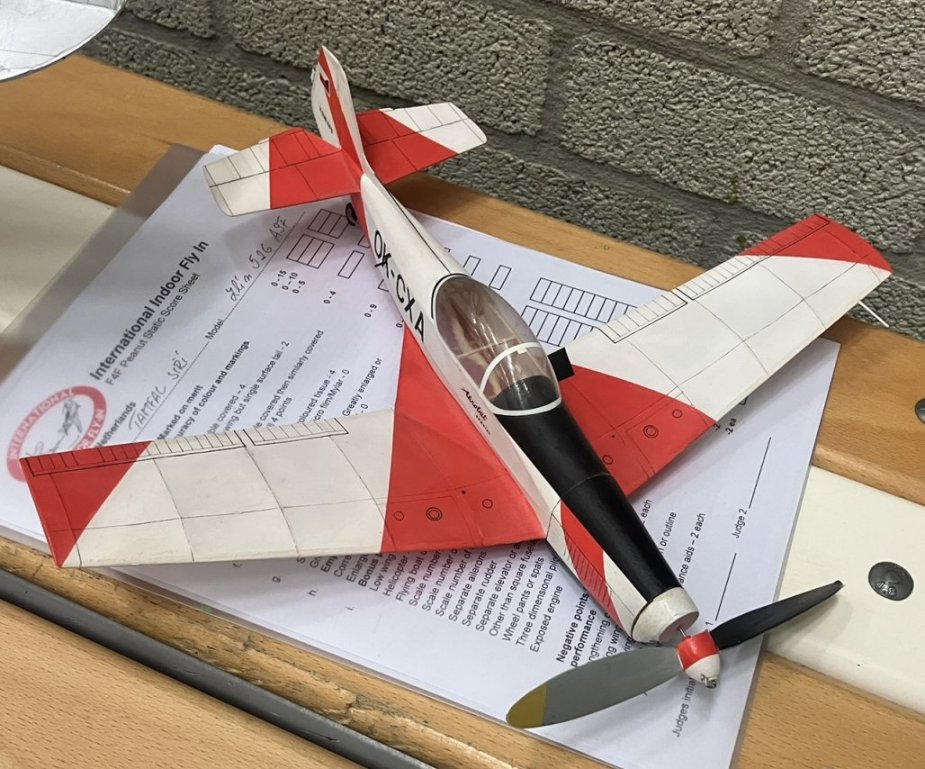
Attractive Zlin 526 ASF built by Jiri Tamfal which finished sixth.
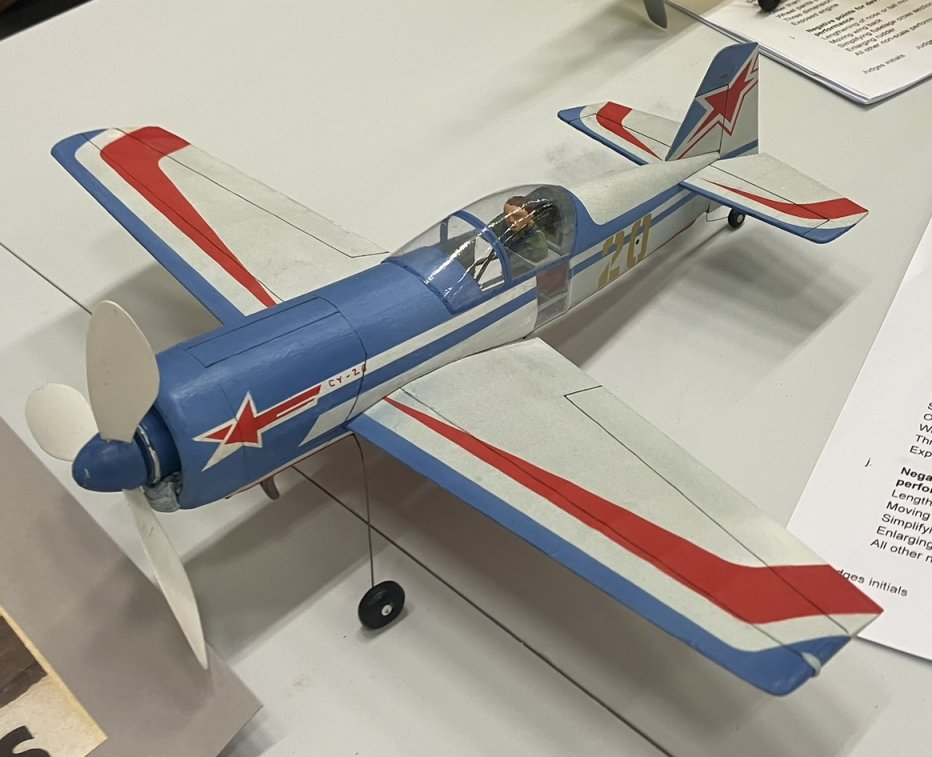
David Prior continues to improve the trim of his very nice Sukhoi Su-26M - it was definitely showing potential.
Twelve pistachio scale models were entered - one more than in 2024, though two failed to post times, including my Folkerts SK-3, which refused to fly at all!
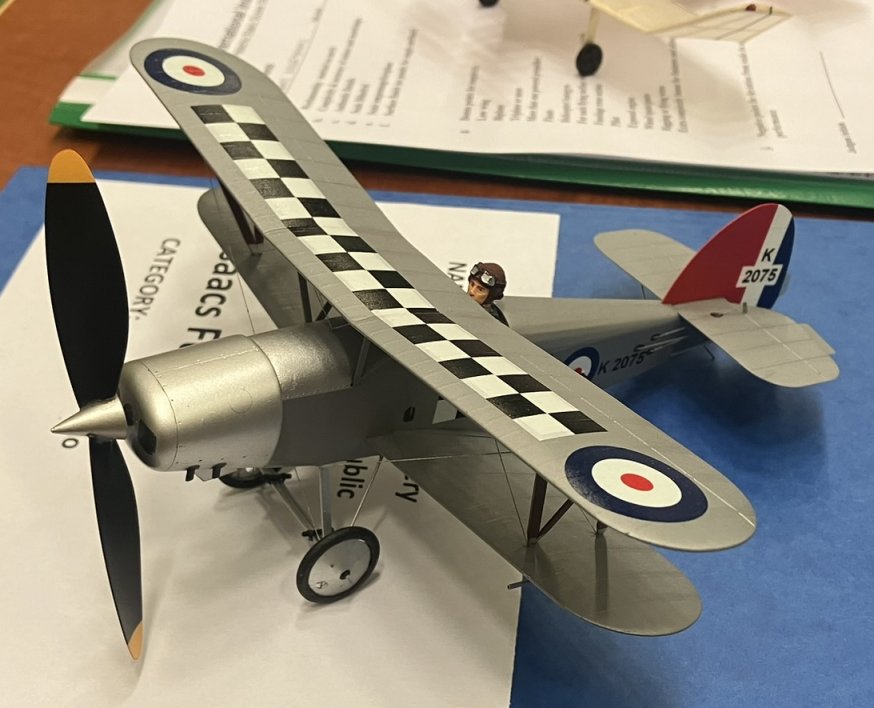
Tonda Alfery had a new model to admire - this Isaacs Fury II won the class, with the top static mark and second highest flight score - a two-flight total of 130 seconds. What a gorgeous little model!
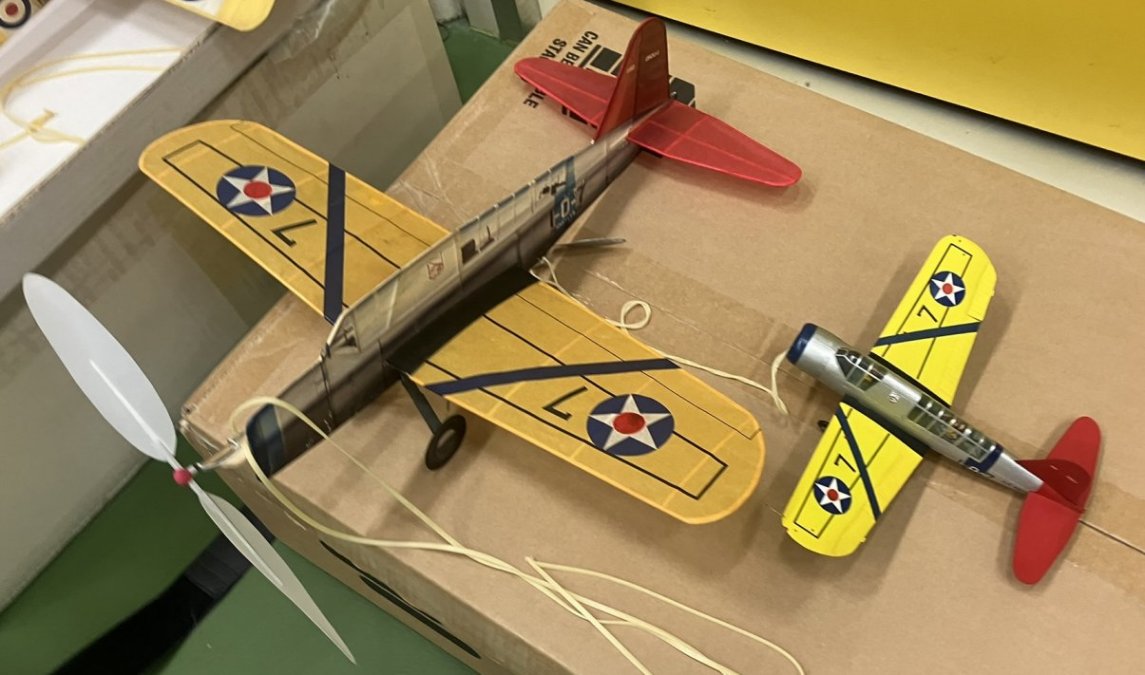
Here is Jiri Dolezel's Vought OS2U Kingfisher which placed second, next to his nocal version, which also finished second in it's class. Note the length of motor that Jiri is using in his pistachio - his two flight total exactly matched Tonda's 130 seconds.
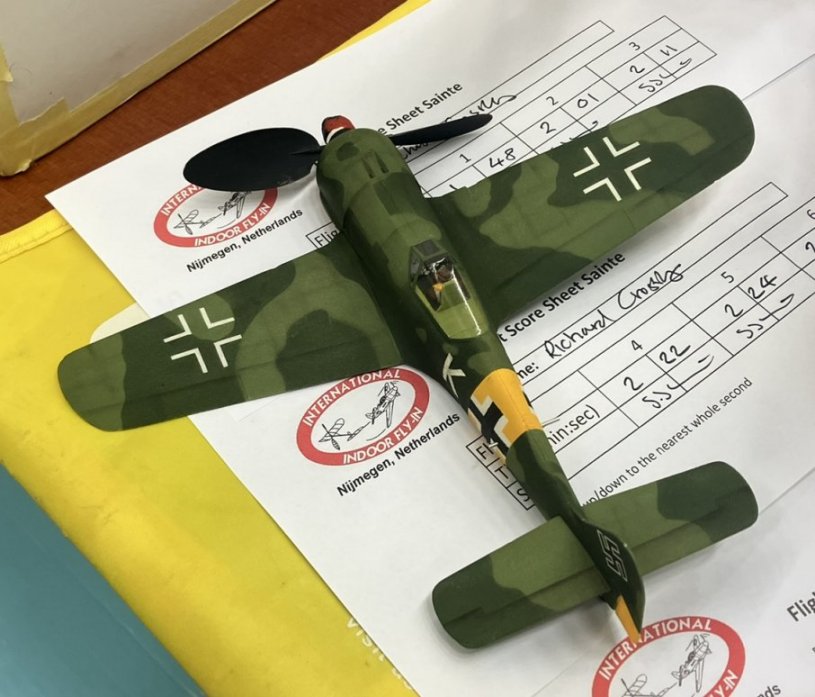
Richard Crossley came third with his foam Focke-Wulf FW-190.
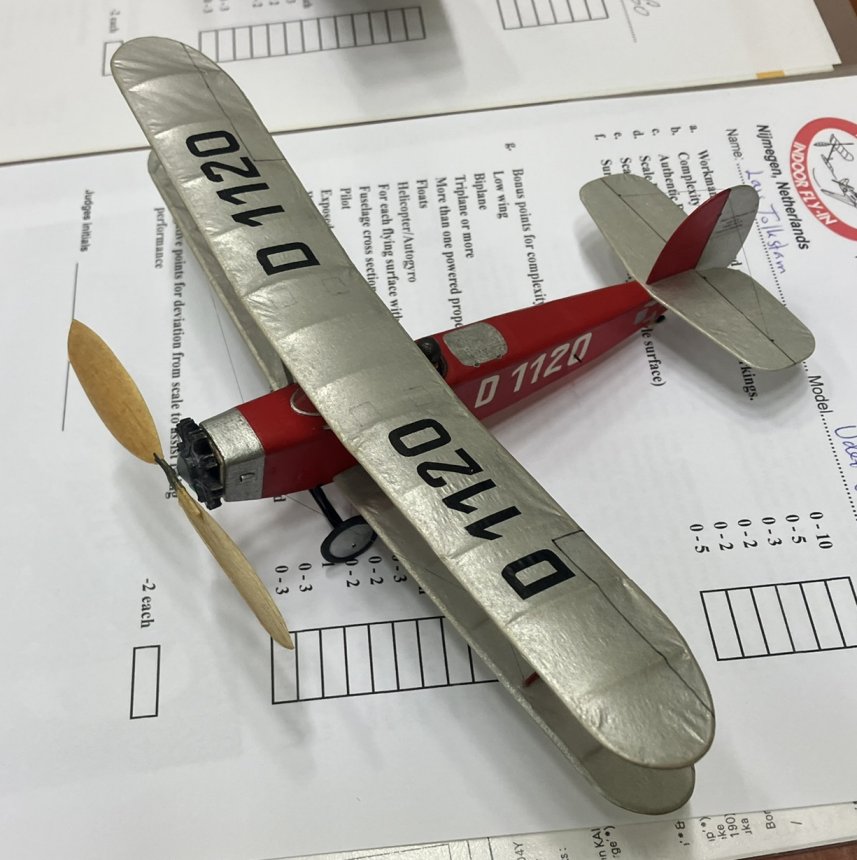
Fourth was Lars Tolkstam's Udet U.12b Flamingo, of traditional balsa and tissue contruction. Places 5 to 7 were filled by three Fike model E's - sadly I failed to get a photo of any of them (this wasn't intentional - honest!)
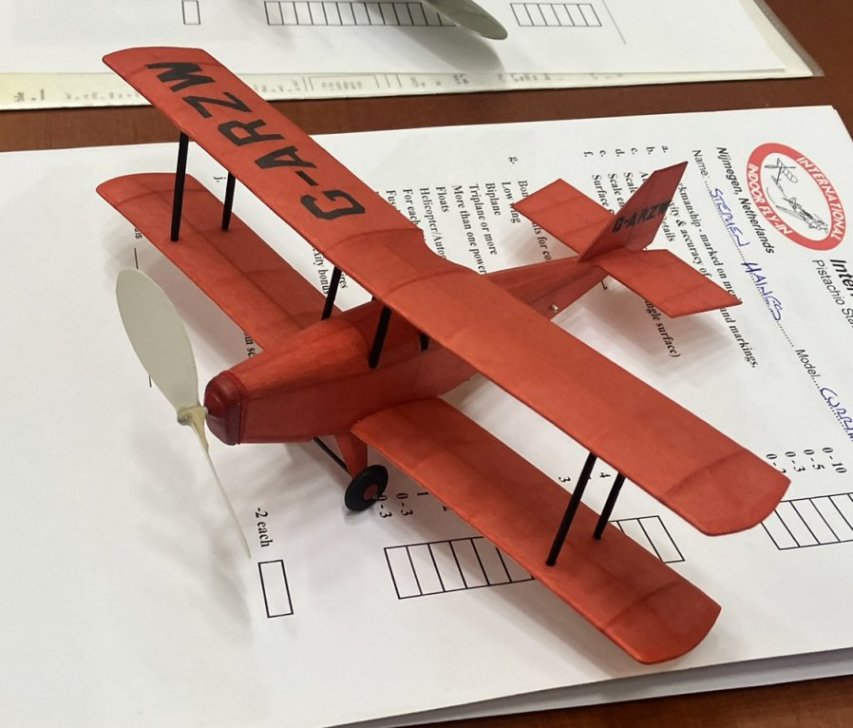
This Currie Wot was Steve Haines's first ever pistachio and it is still in the process of being trimmed - he got it to fly though with a best time of 20 seconds. Now why can't I do that?
Stupid pistachios.
Profile scale also flown, which had 9 entries and was won by Dusan Garba with a Cessna 195 Turbo - his two flight total was 5.45.
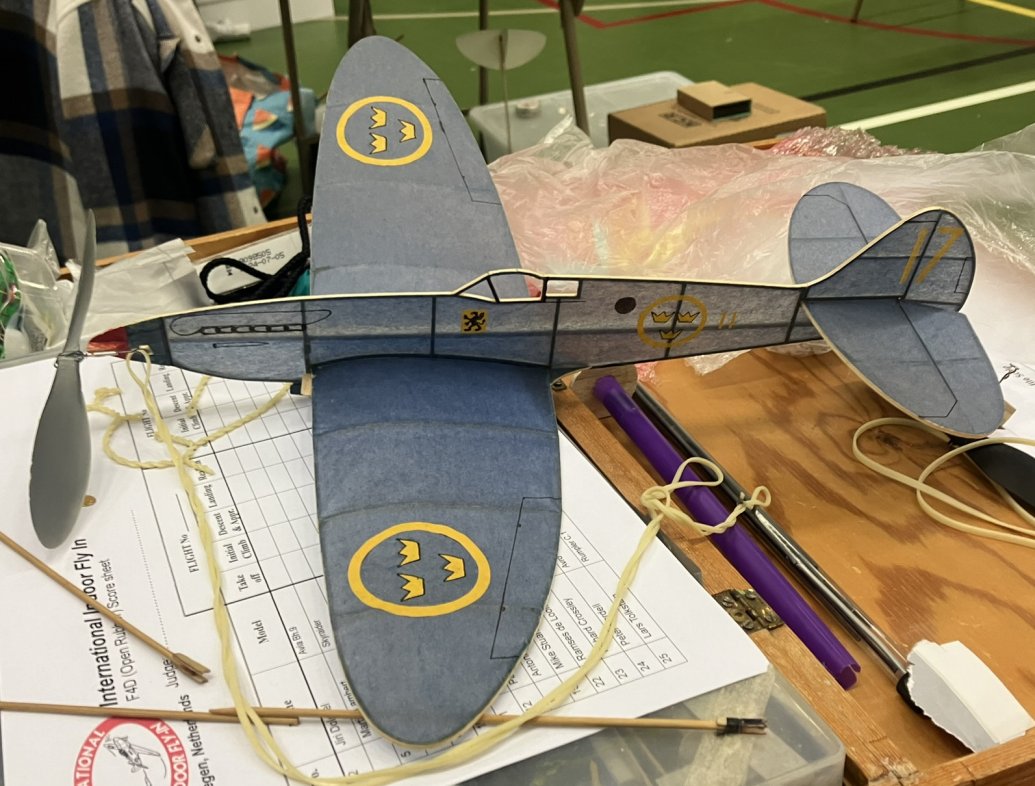
Jiri Dolezel's Kingfisher was second and Lars Tolkstam placed third with this Spitfire MK. XIX.
The glider competition wasn't flown this year, but may make a reappearance in 2026.
I'm very pleased the organisers decided not to take a break while the Jan Massinkhal was being redeveloped, because the event was as enjoyable as ever. It was nice to see some more newcomers taking part - they seemed to have a good time and were grateful for the help and advice given by the regulars - something we all appreciate actually. The new hall was plenty big enough and having one pits area at the end of the hall instead of all the competitors being scattered around the edges added to the general camaraderie. It was a shame it wasn't possible to have the banquet on Saturday evening, but lunches were provided, and drinks were available at the bar (is this standard in leisure centres in The Netherlands? Definitely not something we have in the UK!) The dates for 2026 are now confirmed as 14th - 15th November, with a late night trimming session available on Friday 13th. If you've never been before, why not join us next year? You are guaranteed to have a great time!